Posts

Showing posts with the label Prince of Wales

Brythonic Kings, Welsh Princes, and UK politicians.

Image
Modern British leaders: Post-Roman Brythonic Kings from their respective Kingdoms in Britain, Celtic  de facto and current Princes of Wales & Caernarfonshire, UK politicians. All from the past 1,600+ years  (Wikipedia links used). The Kings of the Welsh Kingdoms represented their country as King of Britain during the sub-Roman (400s AD) conquests a few centuries before the King of Wales title emerged . The Kingdoms emerged in the 5th century as successor states to the Roman Provinces which stood in place for nearly 400 years. From the Iron Age in Britain, the ruling class of leaders of Wales (Cambria) were Kings of Britain, as well as the  Chief Governors of Cambria and Dukes of Cornwall,  and also the  Governors of North Camrbia as Earls of Ewias and  Urtchingfilde from roughly 1,000 BC to 400 AD. The Earldom's  title holder's descendants inter-married with the Chief Governors of Cambria (Duke of Cornwall, King of Britain) as ancestors to the the...

Welsh law, usurpers and civil war

Image
The laws of Wales (Cyfraith Hywel). The internal factions battling for the Kingdom of Gwynedd, civil wars, and conquests to and from Wales, circa. 900-1300 (Wikipedia articles linked). The founding of the Royal House of Aberffraw in Gwynedd saw a new era of governance within the monarchy. Rhodri the Great (Mawr) divided Wales into factions as Kingdoms ruled by Royal Houses. Although Rhodri's descendants were cousins in separate royal households, they were also competitors, and stability was needed to control the country of Wales . This era saw the new laws written for Wales for the first time in over a millennium after the Iron Age. The original laws were the  Molmutine Laws  and had been written by Dyfnwal Moelmud, circa 400 BC. A descendant of Camber (c. 1,000 BC), the first King of Wales and King of Britain in his own right. The next time was  Hywel Dda (Howel the Good) in the 10th century, he was a grandson of Rhodri Mawr, King of Gwynedd, and son of Cadell, the fo...

Celtic Princes of Wales from Gwynedd

Image
The family tree of Gruffudd ap Cynan, King of Gwynedd, King of the Welsh, and his royal descendants claimed the original Celtic (native) title of Prince of Wales, era circa 1137 -1283. And also the effects of the Norman invasion on Wales' royalty (Wikipedia articles linked). The original Princes of Wales were not of English or French origins as presumed from the investiture of the first Prince of Wales, Edward I of England in 1301, that is the history taught as common knowledge today. There is a different history of the Princes, an obscure origins story starting in the 11th century. Those original Princes of Wales were Welsh monarchs from respective Kingdoms within the borders of Wales who claimed Celtic ancestry and then newly mixed with Viking blood ( Northern European ). The era of the native (Celtic) Princes of Wales officially began just before 1165, and then continued sporadically for 200 years until the death of the hereditary male line lineal successor of the Aberffraw d...

Welsh Anglo-Norman castles

Image
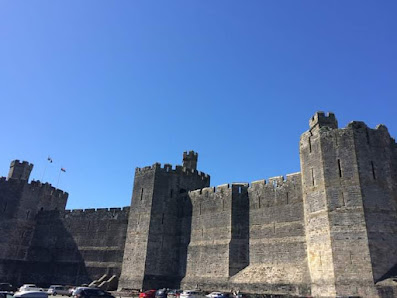
Wales' Norman-built stone castles and English  expansion.   Llywelyn the Great's expedition during 1215, and Welsh built castles. (Wikipedia articles linked). Castles in Wales had been originally built with wood, but they did not last long. Some of these fortifications were adapted from pre-existing  hillforts , and these forts were built using the natural earthworks from the local vicinity, but, in some cases, the fortifications constructed would have a  motte and bailey . For a generation after the  Norman invasion of Wales  in the 1080s, Norman castles were built in the Kingdom of Gwynedd, such as  Aberlleiniog Castle  on Anglesey which was similar to previous fortifications, however this time they were built with stone and capable of withstanding the harsh terrain of Northern Europe.  The Norman fortifications were a few centuries before the new era of castle building which became known as the  Ring of Iron  (1277-1320s) e.g. Ca...